If the thought of going through everything in your home before selling it feels paralyzing, you're in good company. This is one of the biggest emotional and logistical hurdles my downsizing clients face — not finding the next home, not the contract process, but standing in a house full of 20-plus years of accumulated life and not knowing where to start.
The good news is that with the right approach, this process is manageable. Here's how I walk clients through it.
Start earlier than you think you need to
Most people underestimate how long this takes. If you're planning to list in the spring, start sorting in the fall. If you want to list in three months, start this weekend. Not because your home is a disaster — it probably isn't — but because the decision fatigue of going through decades of belongings is real, and rushing it leads to either keeping too much (and staging a cluttered home) or making hasty decisions you regret later.
Give yourself permission to do this in stages rather than one overwhelming weekend push.
Room by room, not all at once
Pick one room — or even one closet — and finish it completely before moving to the next. The kitchen, master bedroom, and main living areas are the highest priority since those are what buyers see first and what photography will focus on. Save the garage, attic, and storage areas for last since those tend to be the most time-consuming and emotionally neutral, which makes them easier to tackle once you've built momentum.
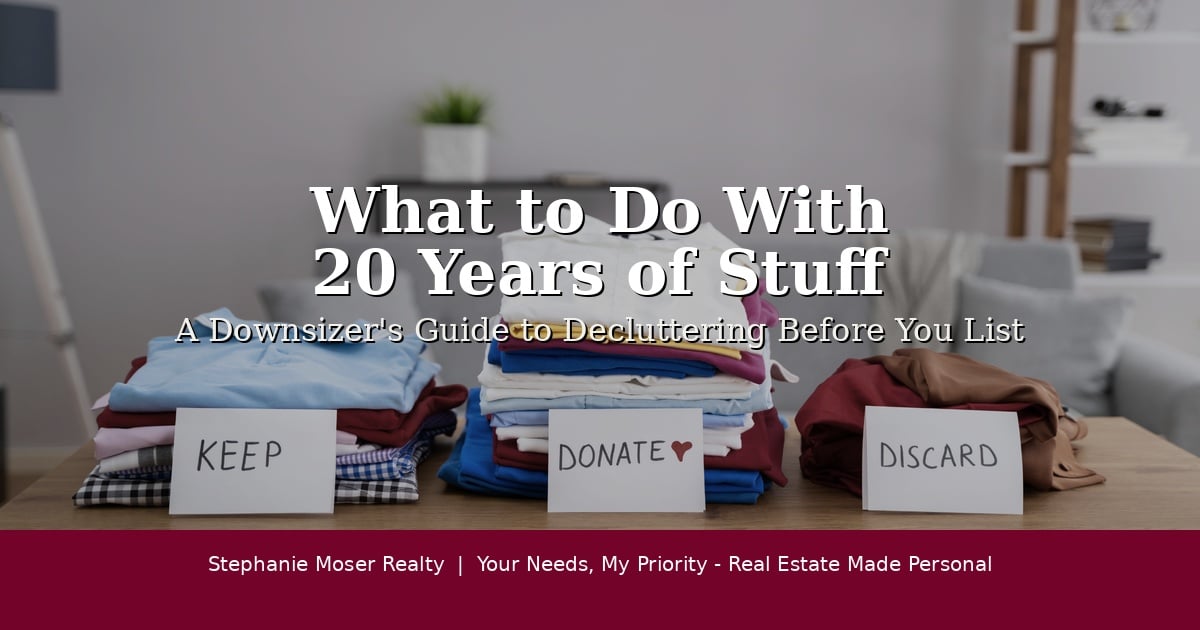
The four-pile system
For every item, you're making one of four decisions:
Keep — it's coming to the next home and fits the space and lifestyle you're moving into. Be honest here. If your next home is 1,800 square feet and you're leaving 3,200, not everything makes the cut.
Give — to family, friends, or donation. Adult kids who've been "meaning to pick things up" need a deadline. Set one.
Sell — Facebook Marketplace, estate sales, and consignment shops are all viable options for furniture and higher-value items. Don't price emotionally — price to move.
Dispose — anything broken, outdated, or that nobody actually wants. Let it go without guilt.
The goal isn't to get rid of everything. It's to make intentional decisions about what earns a place in your next chapter.
What to do with the sentimental stuff
This is where most people get stuck. The chinaset nobody uses but belonged to your grandmother. The kids' school projects from 1998. The furniture that's been in the family for decades.
A few things that actually help: photograph items before donating or selling them so you have the memory without the physical object. Give family members a specific window — two to four weeks — to claim anything they want before it goes. For truly meaningful items you can't part with, factor storage into your next home search rather than trying to force yourself to decide right now.
How this connects to your listing
A decluttered home photographs better, shows better, and sells faster. Buyers need to be able to visualize themselves in the space — and that's nearly impossible when every surface, shelf, and closet is full. The work you put in before listing directly impacts how quickly your home sells and at what price.
I always tell my clients: the decluttering phase isn't just an emotional process, it's a strategic one. Every bag that goes to Goodwill and every piece of furniture that goes to a consignment shop is making your home more sellable.
You don't have to do this alone
Professional organizers, estate sale companies, and senior move managers all specialize in exactly this transition. If the scope feels too big to tackle by yourself, that's not a personal failure — it's a practical problem with professional solutions. I'm happy to point clients toward resources in the North Fort Worth area when the time comes.
The bottom line: start earlier than feels necessary, work in small chunks, make decisions intentionally rather than emotionally, and remember that the goal on the other side of this process is a home that actually fits your life right now — not the life you were living when you moved in.